*Image source: opalschool.org *
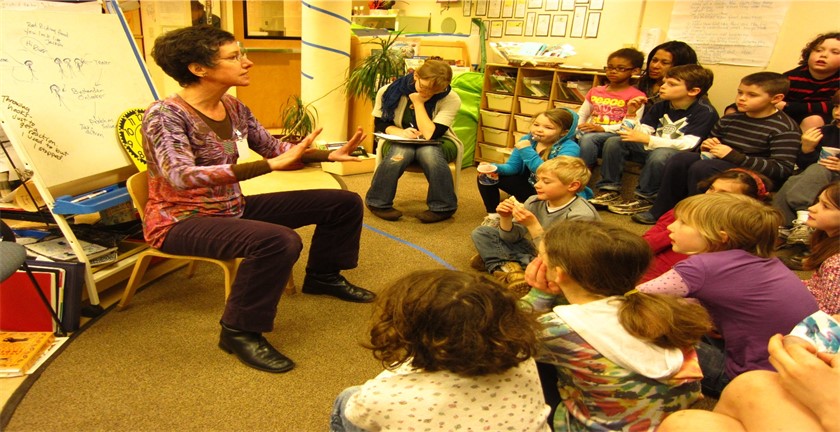
Oral storytelling is a word of mouth communicated to a group of children. It involves face-to-face communication with your audience as you give them a narration of a certain scene. It has been one of the ancient and intimate traditions between a storyteller and his/her audience.
The audience or listeners are often seated together and listening to the story plot as being narrated. Let’s look at the pros and cons of oral storytelling.
Pros:
**1. Enhance learning experience: **Storytelling enhances the learning experience for young children especially those in primary education. They can easily relate to the characters in the story and develop their critical thinking.
**2. Tailor the story based on audience: **Oral storytelling allows you to adjust the style of the story based on the type of audience you have which is not possible with written stories.
**3. Make it simple: **You can narrate the story in a simple manner, eliminate some racy aspects of the story as well as use simple vocabulary to make sure everyone understands. Sometimes you can shorten it.
**4. Connect with the audience: **It gives you physical intimacy and an immediate connection with the audience as you create a dialogue with them. That social connection helps build trust and rapport with them.
**5. Evanescent of oral storytelling: Oral storytelling can soon fade away from our memory or disappear as compared to written form which can last thousands of years and even travel across the world. **
**6. Less expensive: Compared to other forms of passing historical information like books and museums, oral storytelling is cheap. **
7. Communicated anytime: Adult who has facts on any historical information can pass the information from one generation to another at any time.** **
**8. Anybody can listen: You don’t need to know how to read or write to listen or give out a story. **
**9. Ask a question: In oral storytelling, you can ask questions concerning the story and get any clarification of the story. **
10. Engage audience: Oral storytelling allows you to engage the audience, by getting their opinions on the subject story or by asking them questions to know whether they’re attentive.** **
Cons:
**1. Biased: Oral storytelling can be biased due to the nature of its transmission. The narrator can exaggerate the story, change the storyline or talk only about the good things. **
2. No value for oral history: It does not maintain the value of oral history, the story keeps on changing as time goes.** **
**3. Destruction and lack of focus: **Sometimes you may lose focus when listening to a story or be destructed. You may also miss some words or misunderstand others when they’re communicated to you.
**4. Transmission of oral traditions: A story based on oral traditions does not go far in the past. The transmission of the information only depends on powerful memories of various successive generations. **
5. The danger of simplifying the story: In storytelling, you can simplify the story by making it short or changing some words and this can affect the overall message of the story.
**6. Miss connection: **Storytelling is about teaching children about certain historic events thus they may miss the connection between the storyline and something which happened in ancient times.
**7. Inadequate skills: The storyteller may not have the required skills to deliver the story to the audience. **
**8. Passive listeners: **Based on the method used to tell the story, it can produce passive listeners who only receive information without paying much attention or ask questions to understand the story better.
**9. Limit the opportunity to learn by doing: Poor listening and lack of participation in the story limit the listeners the opportunity to learn by doing. **
**10. Require you to build a rapport: **To easily give out the story, you have to build a good relationship with the audience for them to understand the story.