*Image source: thedailybeast.com *
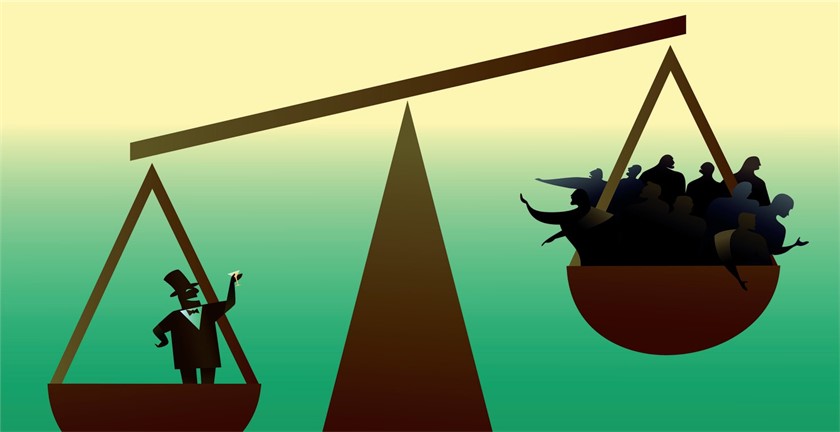
Economic equality ensures there is fairness in income distribution, goods, and services to all citizens. The gap between the high-income earners and the lower-income earners can create inequality and this can affect the distribution of wealth among individuals. Economic inequality poses various benefits and challenges to the growth of the economy.
Pros:
**1. Promote growth: **Greater equality makes societies and economies stronger. There is a correlation between wealth distribution and economic growth in various countries. A high level of economic inequality promotes the economic growth of the country.
**2. Increase fairness: **It ensures there is an equal distribution of wealth and income to individuals. Economic equality results in the utilization of redistributive state policies like progressive taxes.
**3. The incentive to work hard: **Income inequality motivates people to work hard in order to get more money. If there was income equality, people will not work hard or study.
**4. Helps avoid destruction of economic equality: **You can’t take someone’s money he has worked hard to give to someone in order to create equality. This is unfair and people can never be the same.
**5. Makes people value different things: Inequality allows people to work hard for what they value most. This makes people benefit more from the things they value most in life. **
6. Personal freedom: Economic inequality ensure people are empowered through a free enterprise system that helps them earn success through their own potential.
**7. Spreads prosperity: When entrepreneurs are successful, they can indirectly share their wealth through creating employment opportunities for others contributing to national development. **
8. Promote healthy competition: It ensures consumers have access to quality and cheap products across the world. Businesses are able to remain innovative and win the global competition.** **
**9. Promotes stability: **Economic freedom promotes a stable environment for businesses and people. ** **
**10. Equal distribution of income: **It ensures the poor are taxed less whereas the rich a taxed more resulting in the distribution of income.
Cons:
**1. Social problems: There are a lot of social frictions attributed to inequality like more people participating in riots. It also results in an unfair allocation of opportunities to citizens. **
2. Inherited wealth: Inherited wealth promote unfairness to individuals and makes some people lazy than others since they can easily satisfy all their needs with less effort.
**3. Increased crime rates: **A research carried shows economic unequal societies have high crime rates. Inequalities act as an incentive to commit a crime in order to gain more.
**4. Unemployment: High levels of unemployment are contributed by market failure due to inefficient distribution of resources in the free market. This increases levels of poverty in society. **
5. High prices to consumers: In monopoly industries, the bargaining power of suppliers is high resulting in increased prices for the consumers. This results in an unfair distribution of income between suppliers and consumers.** **
**6. **Health effects: Income inequality among citizens limits access to health care facilities and healthy food. Adequate health facilities are unavailable to the poor population in the society and this leads to a decrease in health.
**7. Increase political inequality: In societies where wealth distribution is concentrated with a few people, the political powers are always in favor of those few wealthy people. This results in a lot of corruption and oppression of the poor. **
**8. Increased constraints: **There are many factors that hold people back like income, race, poor background, and others affecting their success.
9. Decrease in education level: The education level of people in the society is linked to the poverty level: A high degree of economic equality with a small low-income population contributes to the high level of education and vice versa.** **
**10. Division in society: ** Income inequality results in division among the poor and wealthy people. The poor tend to associate with other poor people and wealthy people talk to other wealthy people.